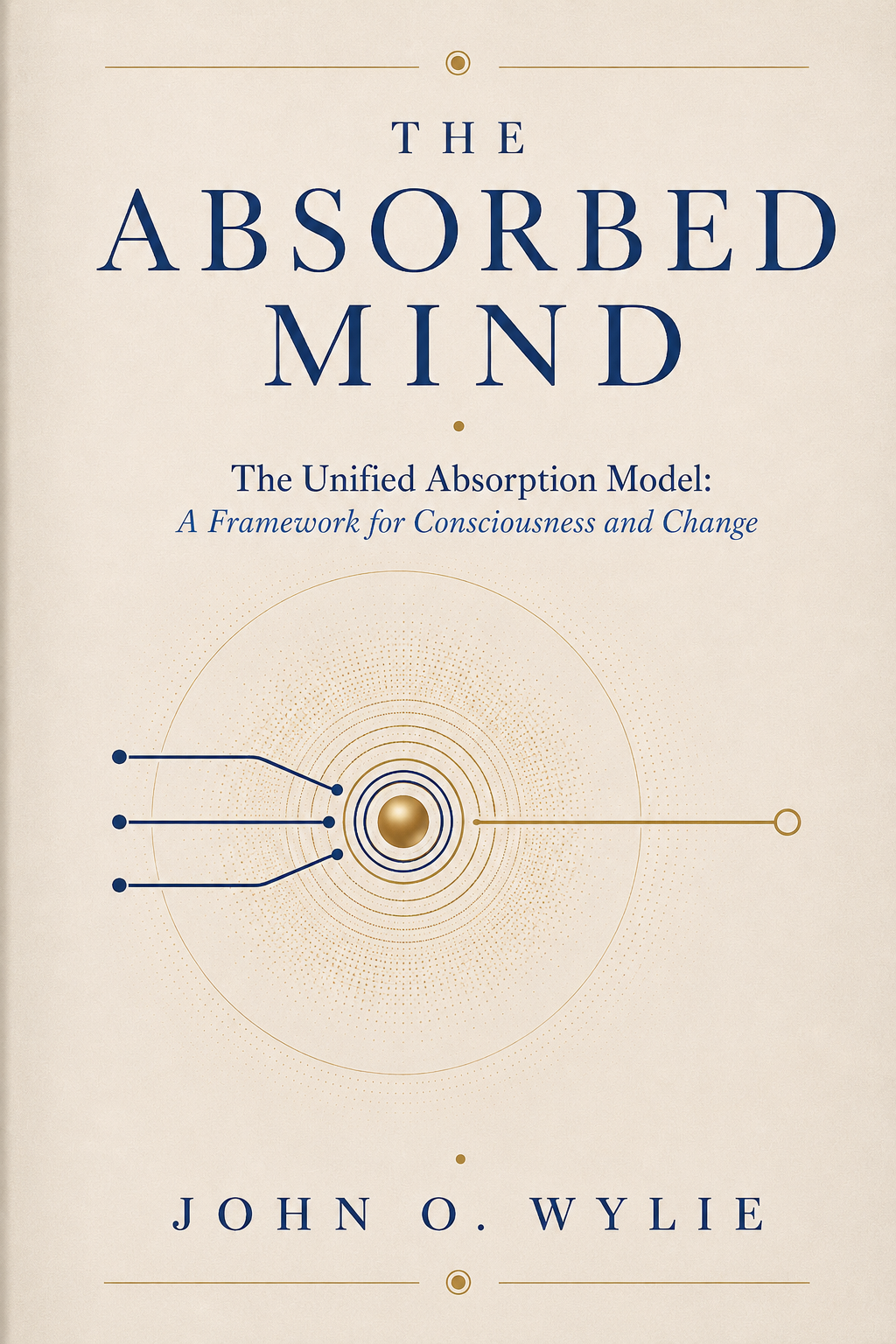
The Absorbed Mind
The Unified Absorption Model: A Framework for Consciousness and Change
By John O. Wylie, CHt—hypnotherapist, author, and developer of the Unified Absorption Model.
A new framework for understanding how attention, dissociation, and automaticity shape experience; how emotion steers absorption; how repeated experience becomes identity; and how the same underlying processes influence hypnosis, flow, anxiety, trauma, addiction, and lasting change.
Join the early-reader listWhat the book is about
Most approaches to change begin with behavior: what a person should do, resist, control, or force themselves to repeat. The Absorbed Mind begins one level deeper—with the processes that determine what captures attention, becomes convincing, operates automatically, and eventually feels like part of the self.
Drawing on more than two decades of clinical hypnotherapy and research across hypnosis, attention, learning, emotion, trauma, meditation, flow, and neuroscience, John O. Wylie introduces the Unified Absorption Model.
UAM describes absorption as the interaction of attention, dissociation, and automaticity. Emotion steers this process toward constriction or expansion. Through repeated cycles of absorption, temporary experiences establish habits, beliefs, emotional patterns, and identities.
The result is a practical, evidence-informed model of consciousness and change—one that explains why people remain trapped in patterns they consciously reject, why willpower repeatedly fails against automatic patterns, and how absorbed experience makes change more natural and durable.
Inside
Part I — Discovery
The Absorbed Mind
What absorption is, how it shapes conscious experience, and why willpower is insufficient when automatic patterns remain unchanged.
The Architecture of Experience
How attention, dissociation, automaticity, and emotion combine to organize conscious experience.
The Unified Absorption Model
How shared underlying processes connect hypnosis, flow, meditation, trauma, anxiety, addiction, learning, and identity.
The Absorption Cycle
How experience is entered, deepened, steered, repeated, and gradually transformed into automatic patterns.
Part II — The Cycle in Action
Identity and Change
How repeated absorption constructs the self—and how identity is deliberately reshaped through new absorbed experience.
Anxiety and Trauma
How attention and emotion narrow experience into self-reinforcing patterns of threat and constriction.
Addiction and Captured Relief
How relief, repetition, and automaticity capture the absorption cycle and make unwanted behavior feel necessary.
Social and Cultural Absorption
How relationships, groups, media, and technology influence what people notice, believe, and become.
Constriction and Expansion
How absorption progressively narrows or widens perception, flexibility, agency, and possibility.
Using Absorption Deliberately
Practical principles for directing attention, creating convincing experiences, and making new patterns familiar and automatic.
Join the early-reader list
Receive selected early material, publication updates, and an invitation to a private reader Q&A with John.
Join the early-reader list